Deck steps are the bridge between your home and backyard, literally and aesthetically. Whether you’re building your first set or upgrading tired treads, the right design transforms both functionality and curb appeal. In 2026, homeowners have more options than ever: from timeless wood to modern floating stairs and durable composites that need zero stain. This guide walks through practical <a href="https://hearthrootsvictory.com/outdoor-living-patio/”>outdoor deck steps ideas that balance safety, maintenance demands, and style, so you can pick an approach that fits your skill level and long-term goals.
Table of Contents
ToggleKey Takeaways
- Outdoor deck steps ideas range from classic pressure-treated wood to modern floating designs and low-maintenance composites, each balancing safety, style, and maintenance demands.
- Proper stringer layout and adherence to IRC building code requirements (7.75-inch maximum riser height) are critical; measurement mistakes cascade and affect the entire staircase alignment.
- Composite and PVC decking steps eliminate annual staining and sealing, paying for themselves over 15 years through reduced maintenance, though they carry higher upfront costs.
- Handrails are legally required for stairs with more than three or four rises, and recessed LED lights transform steps into safe, visually striking design features.
- Professional guidance is essential for floating stairs, high-set decks (over 30 inches), and complex designs; site inspection and proper prep work determine success more than material choice.
Classic Wooden Deck Steps
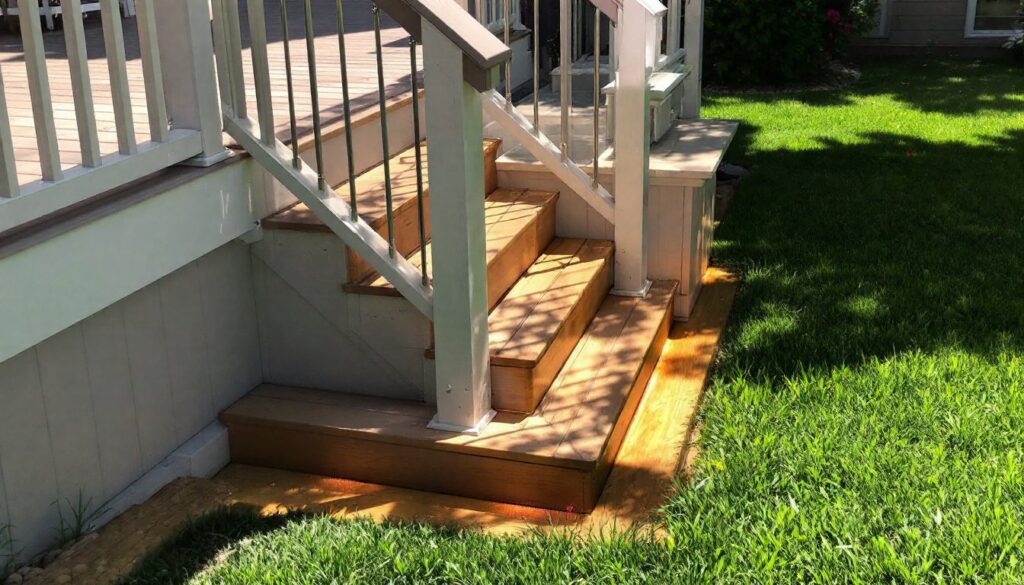
Wood never goes out of style for deck stairs because it’s forgiving to work with and looks right at home in most backyards. Pressure-treated lumber dominates for good reason: it resists rot and insects without constant upkeep. A standard outdoor staircase uses 2×12 stringers (the angled support beams) and 5/4×6 or 2×6 treads. The 5/4 thick material is actually closer to true 1-inch nominal thickness and won’t cup or warp as badly as standard 2x lumber over seasons of wet-dry cycles.
Before cutting stringers, measure vertical drop (the height from deck to ground) and desired tread depth (typically 10–11 inches). The IRC building code requires a minimum 7.75-inch riser height maximum, though local codes vary. Layout mistakes here cascade, misalign one rise and your last step lands wrong. Many builders use a framing square or commercial stair gauges to mark stringers accurately: it’s worth the small investment if you’re doing more than three steps.
Sealing is non-negotiable. After construction, apply two coats of exterior deck stain or semi-transparent sealer within 3–6 months of exposure. This prevents water absorption and UV damage. Reapply every 2–3 years depending on foot traffic and climate. Maintenance-averse homeowners often regret skipping this step (literally) when wood grays and splinters take over.
Modern and Contemporary Stair Designs
Floating and Minimalist Stairs
Floating stairs, where treads appear to hover without visible support, deliver a clean, architectural look that photographs well. The engineering is real but hidden. Treads bolt to a single central steel or aluminum stringer mounted to the deck frame or grade beam. This works best for 3–5 steps: longer runs need more structural support and often require a professional engineer’s stamp.
Minimalist designs strip away everything but function. Picture open risers (no backing between steps), narrow guardrails, and uniform tread materials. Steel and glass combinations are popular but slippery in wet conditions, add anti-slip nosing on edges. Concrete treads poured in place suit this aesthetic too: they’re durable and can be stained or sealed to match surrounding hardscaping.
Budget considerably more for floating designs than traditional stringers, labor and engineering fees add $800–2,000+ depending on span and material. These stairs also feel less stable underfoot for anxious climbers, so consider your household and guests before committing. If building any stairs with open risers, confirm that local codes permit them: many jurisdictions restrict this for child safety.
A step-by-step guide from Ana White shows how DIY builders tackle simpler modern designs using standard materials, though complex metal work usually demands professional fabrication.
Low-Maintenance Material Options
Composite and PVC Decking Steps
Composite decking steps blend wood fibers with plastic polymers, delivering the look of real wood without annual staining. Materials like Barrette Outdoor Living Decking use proprietary color blends and surface treatments that resist fading, staining, and mold. Treads cost 2–3× more than pressure-treated lumber, but over 15 years the savings in sealer, stain, and repairs add up.
Composite isn’t perfect. It’s heavier, requiring robust support structure. It can soften in intense heat (dark colors especially), so lighter tones stay more stable. Some composites are slippery when wet: look for products with micro-texturing or plan to add non-slip tape. Installation matches solid wood techniques, same stringer spacing and riser heights apply.
PVC steps offer the ultimate low-maintenance option. Unlike composite, PVC doesn’t absorb moisture and resists rot completely. It’s rigid, won’t splinter, and cleans up with a hose. The tradeoff: purely synthetic appearance (though colors and textures have improved) and higher initial cost. PVC suits modern aesthetics more naturally than wood-look composite.
Aluminum is another route for minimalist designs. It doesn’t rust if you choose marine-grade alloy, and it’s lightweight, making it easier to handle during installation. Aluminum can ice over in winter, so pair it with grip tape or textured treads. Site context like humidity, freeze-thaw cycles, and salt air should drive material choice.
Accent Lighting and Safety Features
Proper lighting transforms steps from tripping hazards into design features. Recessed LED lights mounted under or beside treads guide feet safely after dark. Solar-powered stair lights cost $10–30 per unit and need no wiring, screw them to the face or side of each riser. Hardwired uplighting beneath treads creates dramatic shadow lines and integrates with existing deck circuits. Budget extra if running electrical from the house: buried wiring needs conduit and GFCI protection (National Electrical Code requirement for outdoor circuits).
Handrails are legally required for stairs with more than three or four rises (check local code, it varies). Rail height runs 34–38 inches from tread nosing and must support 200 pounds of lateral force. Standard 2×4 or composite rail kits mount quickly. Balusters (vertical spindle members) can’t allow a 4-inch sphere to pass between them, this prevents child entrapment. Simple horizontal cables instead of balusters suit modern looks but cost more and need turnbuckle tensioning annually.
Anti-slip treatments matter. Exterior deck coating with aggregate (sand-like texture) costs under $100 a gallon and covers roughly 200–250 square feet. Paint it on treads before sealing. Adhesive-backed grip tape works too if you prefer easier removal later. Some people add a beveled nosing edge, a small routed or beveled detail on the front of each tread, to signal step edges to bare feet and improve visual contrast.
For DIYers tackling stairs themselves, projects from Instructables document full builds including guardrail installation, though a licensed contractor is wise if your deck sits high off grade or serves multiple stories.
Conclusion
Outdoor deck steps anchor your backyard’s character and safety. Whether you choose classic pressure-treated wood, sleek floating stairs, durable composite treads, or lit and guarded multi-step runs, the key is matching design ambition to your maintenance tolerance and local building codes. Start with a site visit to ground level, measure vertical drop, note soil conditions, and identify any grading challenges. Prep work determines success more than fancy materials. If structural concerns exist or your deck sits more than 30 inches high, call a pro. A solid foundation and thoughtful finish make the difference between stairs you love and ones you’ll regret in five years.