Whether you’re planning a full outdoor kitchen or just a simple prep surface, choosing the right countertop material makes all the difference. An outdoor countertop endures sun, rain, temperature swings, and heavy use, yet it needs to look good doing it. The challenge isn’t finding options: it’s matching the right material to your climate, budget, and maintenance tolerance. This guide walks through five proven outdoor countertop ideas, each with its own strengths, so you can pick the surface that fits your backyard vision and lifestyle.
Table of Contents
ToggleKey Takeaways
- Granite is the toughest natural stone option for outdoor countertops, costing $50–$100 per square foot installed and requiring annual sealing to resist moisture and stains.
- Concrete countertops offer maximum customization at $40–$80 per square foot, but need resealing every 1–3 years and proper curing conditions in freezing climates.
- Engineered quartz and composite countertops are non-porous, stain-resistant, and require minimal maintenance, making them ideal for homeowners seeking low-upkeep outdoor countertop materials.
- Tile is the most budget-friendly option at $15–$50 per square foot, but grout lines must be sealed annually as they’re prone to water absorption and mold.
- Climate zone and structural support requirements must be evaluated before installation—freeze-thaw cycles in northern regions demand different materials and sealing strategies than hot, dry climates.
- Your maintenance commitment is crucial; if you won’t seal annually, engineered materials offer better durability than stone or concrete alternatives.
Natural Stone Options for Timeless Outdoor Appeal
Granite and Marble for High-End Durability
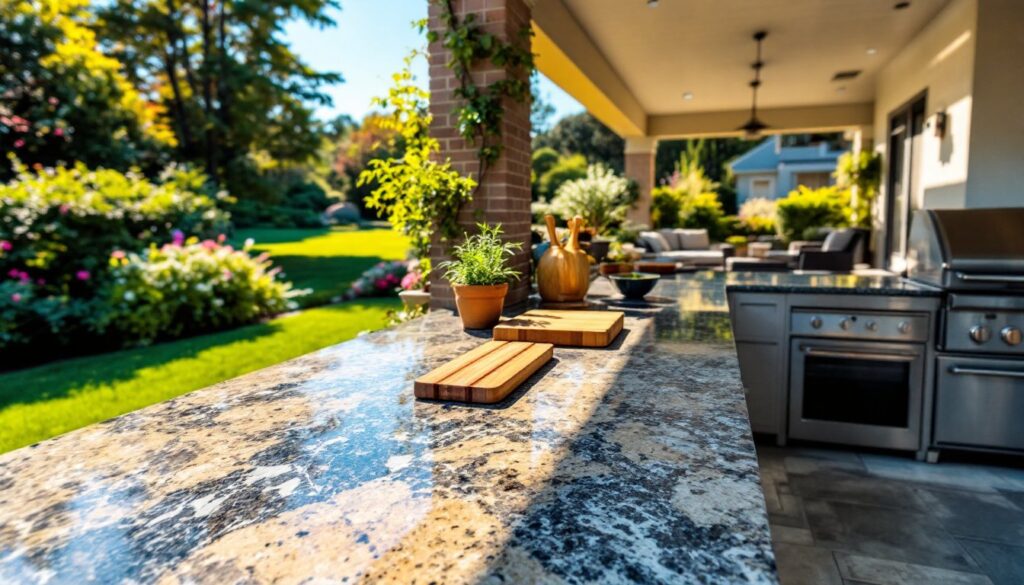
Granite is one of the toughest countertop choices for outdoor spaces. It’s non-porous when properly sealed, resists heat and scratches, and actually improves in appearance over decades as it weathers. A 1-inch-thick granite slab costs roughly $50–$100 per square foot installed, depending on grade and finish. Marble, while more elegant, is softer and more porous than granite, so it’s better suited to covered outdoor areas where it won’t face constant weather exposure.
Both stones require annual resealing to stay protected against moisture and stains. On the practical side, granite won’t crack under a hot skillet straight from the grill, and it won’t fade in direct sunlight. The trade-off is weight, you’ll need adequate support framing, and installation typically requires a professional. Always confirm your local building code permits for any structural modifications needed to support the stone.
Marble adds that classic, high-end look but demands more maintenance than granite. Acidic substances (lemon juice, wine, vinegar) can etch the surface, leaving dull spots. If you love the marble aesthetic but want more durability, consider a honed granite with a marble-like appearance as a practical compromise.
Concrete Countertops: Modern, Versatile, and Customizable
Concrete offers flexibility that stone can’t match. You can color it, embed glass or stone fragments, stamp patterns, or pour custom shapes to fit any outdoor kitchen layout. A poured concrete countertop costs $40–$80 per square foot installed, making it a middle-ground option between budget tile and premium stone.
The catch: concrete is porous and will crack with age and freeze-thaw cycles unless properly sealed and maintained. High-quality polyurethane or epoxy sealers add durability, but they need reapplication every 1–3 years depending on weather and UV exposure. In freezing climates, air entrainment (tiny air bubbles incorporated during mixing) reduces damage from ice expansion.
Concrete’s real advantage is customization. Want a live edge? A built-in drainboard? A seamless top that wraps your grill alcove? Concrete delivers without the cost of fabricating stone. But, pouring concrete outdoors requires proper curing conditions, temperature and humidity matter. Most professionals recommend hiring a specialist for outdoor pours, especially if structural support modifications are needed. Better Homes & Gardens regularly covers concrete finishing techniques if you want to see design inspiration.
Composite Materials and Engineered Surfaces
Engineered quartz and composite countertops blend durability with low maintenance. These factory-made surfaces combine crushed stone with polyester or epoxy resin, creating a non-porous, stain-resistant product. Brands like Caesarstone, Silestone, and Sparkling White offer outdoor-rated lines specifically formulated for UV and temperature swings. Costs run $50–$90 per square foot installed.
Composites won’t stain, etch, or require sealing, huge advantages for outdoor use. They resist bacteria buildup and are easy to clean with just soap and water. The downside is that they’re not truly “natural,” so some homeowners prefer stone’s traditional appeal. They can also be damaged by extreme heat (a hot pot straight from the grill can scorch the surface), so you’ll still need trivets.
If you’re pairing your countertop with outdoor furniture, composites work well because they’re available in dozens of colors and finishes that coordinate with modern outdoor decor. Installation is straightforward, most require only standard fabrication and mounting, not specialized heavy equipment like stone needs. Make sure your installer checks local codes for any structural requirements.
Tile and Brick: Budget-Friendly and Easy to Maintain
Tile is the most affordable outdoor countertop option, with installed costs ranging from $15–$50 per square foot depending on quality. Porcelain or natural stone tile resists moisture and temperature changes better than ceramic, so choose porcelain for outdoor use. Larger format tiles (12×24 inches or bigger) reduce grout lines, which are the weak point in tile countertops, they absorb water and can harbor mold if not sealed.
The installation challenge is getting the substrate right. A solid base of 3/4-inch exterior plywood over pressure-treated joists works, but many professionals prefer a cement board or uncoupling membrane to prevent cracking as the framing shifts seasonally. Grout lines must be sealed annually, and darker grouts show stains less than light ones. Tile itself won’t stain if it’s sealed, but the grout will.
Brick offers a rustic, time-tested look and pairs beautifully with covered outdoor living rooms. Like tile, brick is affordable and won’t rot or rust. It’s less uniform than tile, which appeals to some homeowners. The trade-off is that brick is softer, it scratches and absorbs stains more easily than porcelain. Seal brick annually with a breathable sealer so moisture can escape and prevent freeze-thaw damage in cold climates. Both tile and brick require proper slope (1/4 inch per foot) to shed water and prevent pooling.
Key Considerations for Outdoor Countertop Selection and Installation
Before ordering materials, evaluate your climate zone. Freeze-thaw cycles in northern regions demand materials and sealing strategies that differ from hot, dry climates. Check whether your local building department requires permits for outdoor kitchen construction, most jurisdictions do if utilities (gas, water, electrical) are involved. Even a simple countertop might trigger inspections if it’s part of a structure that affects drainage or foundation.
Measure twice. Get the height right (36 inches is standard, 42 inches for bar seating), overhang (12–15 inches is typical), and length. Account for any appliances or a sink, their footprints and plumbing requirements affect layout. If you’re incorporating a grill or cooktop, ensure your countertop material can handle localized heat. Concrete and granite fare best: composites and tile require protective barriers.
Support matters. Most outdoor countertops need framing underneath, posts, joists, or a foundation. Confirm load ratings with your material supplier, and don’t skip this step. If you’re unsure about structural requirements, hire a professional. For anything more complex than a simple tile surface over an existing deck, an outdoor living space contractor can assess your site and handle permitting.
Maintenance commitment shapes your choice. Granite and stone need annual sealing. Composite and tile require regular but lighter upkeep. Concrete demands more attention in cold climates. Choose based on how much maintenance you’ll realistically do. If you won’t seal a countertop annually, opt for engineered materials. Country Living showcases rustic countertop styles that prove simple materials, properly maintained, age beautifully.
Conclusion
The best outdoor countertop balances durability, maintenance, budget, and aesthetics. Stone offers timeless appeal but requires commitment to sealing. Concrete delivers customization. Composites provide low-maintenance durability. Tile and brick are affordable and proven. Match the material to your climate, your willingness to maintain it, and your design vision. A well-chosen outdoor countertop will serve your backyard kitchen reliably for decades, making every meal prep and gathering worth the investment.