A solid patio cover transforms how you use your backyard year-round. Whether you’re escaping scorching afternoon sun, sheltering from light rain, or simply creating a defined <a href="https://hearthrootsvictory.com/covered-outdoor-living-room/”>outdoor living area, the right solution makes the difference between a space you avoid and one you actually live in. This guide walks through eight proven patio cover ideas, from classic pergolas to modern shade sails, so you can pick the approach that fits your budget, climate, and design goals.
Table of Contents
ToggleKey Takeaways
- Outdoor patio cover ideas range from pergolas and retractable awnings to modern shade sails and polycarbonate panels, each offering different benefits for sun protection and budget levels.
- Pergolas provide classic style with flexible shade options, while low-maintenance vinyl or aluminum versions cost more upfront but eliminate the need for regular staining and rot checks.
- Shade sails deliver sleek, contemporary coverage with 80–95% UV blocking at the lowest cost ($300–$800), making them ideal for modern minimalist spaces and budget-conscious homeowners.
- Retractable awnings offer year-round control with motorized or manual options, though professional installation ($1,000–$2,000) ensures proper alignment and durability of 10–15 years.
- Polycarbonate roof panels provide genuine weather protection while maintaining light transmission, requiring structural planning and often building permits due to permanent installation and snow-load considerations.
- Choose your patio cover based on three factors: shade requirements, budget (ranging from $300 for sails to $5,000+ for awnings and polycarbonate), and local climate demands for wind, rain, or snow resistance.
Pergolas: Classic Style With Flexible Shade Options
A pergola delivers open-roof sophistication without the full enclosure of a solid canopy. The overhead grid of wooden or vinyl beams creates dappled shade while letting breezes flow through. You get visual interest, partial UV protection, and an inviting framework for climbing vines or fabric draping.
Wood pergolas demand regular maintenance, stain or paint every two to three years, check for rot, and tighten fasteners. Pressure-treated lumber (typically rated for 15–20 years) and cedar resist decay better than standard pine. Vinyl and aluminum options skip the upkeep but cost more upfront.
Size matters: A 4×8 foot overhead grid is minimal: 6×10 feet gives comfortable coverage for a small seating area. Posts must be sunk in concrete footings, 2–3 feet deep, especially in frost-prone zones. Many DIYers handle the assembly, but digging footing holes and leveling a structure this size often calls for a second set of hands and a laser level.
Cost ranges widely, kits run $1,500–$3,500 depending on material and size. Adding an attached structure to an existing home may require a building permit and engineered drawings: check with your local building department. A pergola paired with Outdoor Patio Living furniture transforms the space into an inviting retreat.
Retractable Awnings: Control Your Coverage Year-Round
Retractable awnings give you the best of both worlds: full sun when you want it, instant shade when you don’t. A motor winds the fabric canopy in and out, controlled by a remote or wall switch. Motorized versions start around $2,000: manual crank models cost less but require more labor.
Fabric choice affects durability and performance. Solution-dyed acrylic (brands like Sunbrella) resists fading and mildew better than vinyl or polyester. Look for 300–400 GSM (grams per square meter) density for long-term weather resistance. Most modern awnings handle wind speeds up to 25–30 mph: an anemometer sensor auto-retracts them in gusts above that threshold.
Installation demands precise measurement and solid mounting points. Wall-mounted models bolt to rim board, fascia, or even posts: roof-mounted versions sit flush with the roofline. Both require drilling, heavy fastening hardware, and often reinforcing the mounting surface. This isn’t typically a solo DIY job, professional install ($1,000–$2,000) ensures proper tension and alignment.
Warranty coverage usually runs 5–10 years on the motor: the fabric itself typically lasts 10–15 years with care. Rinse the awning annually and retract it during winter in snow-prone areas. A properly installed retractable awning becomes part of your home’s exterior value.
Shade Sails: Modern, Minimalist, and Budget-Friendly
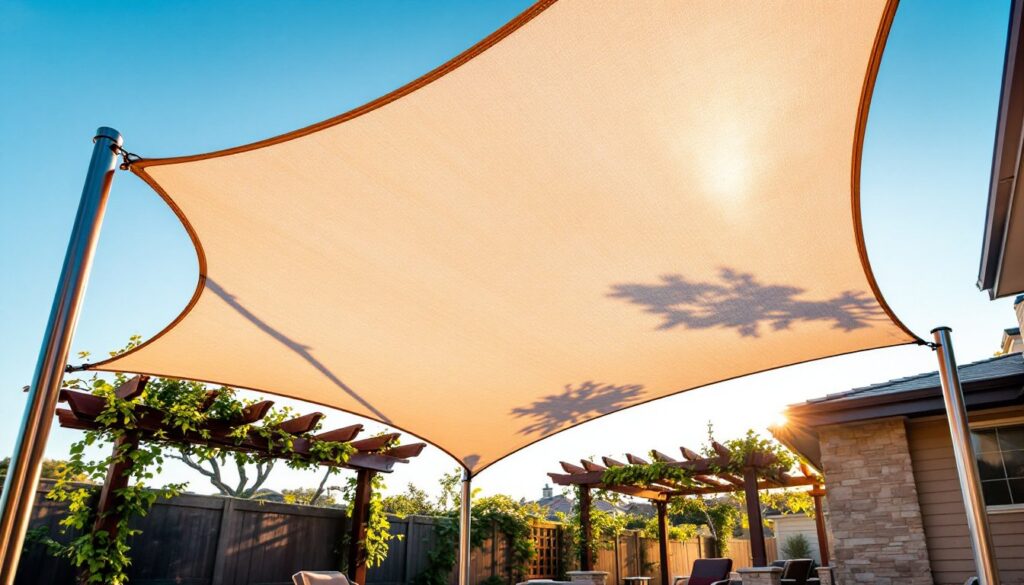
Shade sails are tensioned fabric squares or triangles strung between posts or existing structures. They deliver sleek, contemporary look with 80–95% UV blocking (depending on fabric) at a lower cost than pergolas or awnings. A single sail covering a 10×10 foot area runs $300–$800 for materials.
Installation involves mounting corner attachment points, either steel posts set in concrete or existing beams and walls. Stainless steel hardware resists corrosion: galvanized fasteners are cheaper but corrode in salty or humid climates. The fabric itself stretches tight and must be correctly tensioned: too loose and it sags and catches wind: too tight and stress concentrates at corners.
Materials vary: commercial-grade HDPE (high-density polyethylene) lasts 10–15 years and handles UV well. Reinforced polyester costs less but fades faster. Whichever you choose, look for 160–220 GSM fabric weight for durability.
Sails handle wind better than you’d think, the tension itself provides stability. Still, winds consistently exceeding 30 mph can stress corner fittings. In storm-prone areas, you may need to lower or remove sails seasonally. DIY installation is feasible if you’re comfortable with basic carpentry, drilling, and tensioning cable. Many homeowners hire a professional to handle the tension calibration ($500–$1,500 labor). Pairing sails with Covered Outdoor Living Space planning ensures your layout maximizes shade where you need it most.
Polycarbonate Roof Panels: Weather-Resistant Protection
Polycarbonate panels offer real weather protection while maintaining light transmission. These rigid, plastic sheets come in clear, frosted, or tinted versions and fit atop a frame (usually aluminum or steel). Unlike solid roofs, they filter harsh UV while staying cooler than metal and letting you see the sky.
Twin-wall polycarbonate (two layers with air space) provides better insulation than single-wall and weighs less than glass. Panels typically measure 24″ or 48″ wide and come in 6–20 foot lengths. A basic single-panel roof covering a 12×10 foot patio runs $800–$1,500 for materials plus framing.
Framing demands structural planning. Posts need to be spaced 8–10 feet apart and sunk in concrete footings, especially in snow-load regions. Panels must slope slightly (⅛ inch per foot minimum) for water runoff, and you’ll need gutters along the low edge. This is a structural project, load calculations and local codes matter. Many jurisdictions require a building permit for permanent structures, and some demand an engineer’s stamp.
Expansion and contraction: Polycarbonate moves with temperature swings. Leave ¼ inch clearance between panels and frames to prevent buckling. Aluminum frames handle this naturally: steel frames need quality fasteners and regular inspection for rust.
Durability is solid, 10-year warranties are standard: the material often lasts 20+ years. Panels yellow slightly with age but maintain structural strength. Cleaning is straightforward: mild soap and water, no abrasive scrubbers. This setup delivers substantial coverage while keeping your patio usable during light rain.
Living Walls and Green Covers: Natural Shade Solutions
Growing vines over a trellis, arbor, or pergola creates a natural canopy that cools through evapotranspiration, the plants actually lower ambient temperature, not just block sun. Clematis, climbing hydrangea, hops, and grapevines are robust choices in most zones. Fast-growing varieties cover a structure in two to three seasons.
Setup requires sturdy infrastructure, flimsy trellises collapse under mature vine weight. Think ½ inch steel cable, 2×4 inch lumber, or rigid wire mesh rated for your region’s wind. Vines must climb something solid: they can’t cling to smooth vinyl or weak stakes.
Maintenance is ongoing: pruning, training new growth toward the frame, watching for pests, and managing water. In dry climates, supplemental irrigation (drip lines or soaker hoses) keeps vines thriving. Deciduous varieties (like grapevines) drop leaves in fall, letting winter sun through, a bonus in cold climates. Evergreen options (ivy, climbing fig in mild zones) provide year-round coverage but demand careful selection for your hardiness zone.
Cost starts low, a bare trellis and dormant vines cost $100–$300, but labor and patience add up over time. This approach pairs beautifully with outdoor furniture and seating for a garden-room feel. The natural aesthetic works well on period homes and cottage-style landscapes.
Choosing the Right Cover for Your Space
Budget, Climate, and Design Considerations
Your choice hinges on three questions: How much shade do you need? How much can you spend? What does your climate demand?
Budget: Shade sails and living walls start cheapest ($300–$600 materials): pergolas run mid-range ($1,500–$3,500): retractable awnings and polycarbonate roofs push higher ($2,000–$5,000+). Labor can double or triple installed costs.
Climate: Hot, dry climates benefit from high-UV-blocking fabrics (sails, awnings, dense vines). Rainy regions need solid or sloped coverage (polycarbonate, metal roofs). Snowy zones require structural strength and proper load calculations. Windy coastal areas demand wind-rated fasteners and sometimes professional installation.
Design: Pergolas suit traditional homes and Mediterranean aesthetics. Shade sails fit modern minimalist spaces. Polycarbonate looks industrial-contemporary. Living walls add organic charm. Retractable awnings work almost anywhere because they vanish when retracted.
Permanence matters: Shade sails and awnings are semi-permanent: you can uninstall them. Pergolas and polycarbonate roofs become part of the structure and often require permits. Permits add cost and time but ensure code compliance and property-value protection.
Start with your biggest pain point: relentless sun, frequent rain, or visual plainness. Then match a solution to your skill level and budget. Most projects benefit from design consultation resources or a local contractor’s input if the scope exceeds your comfort zone. The best patio cover is one you’ll actually use, so pick something that solves your real problem, fits your lifestyle, and won’t expensive maintaining it.