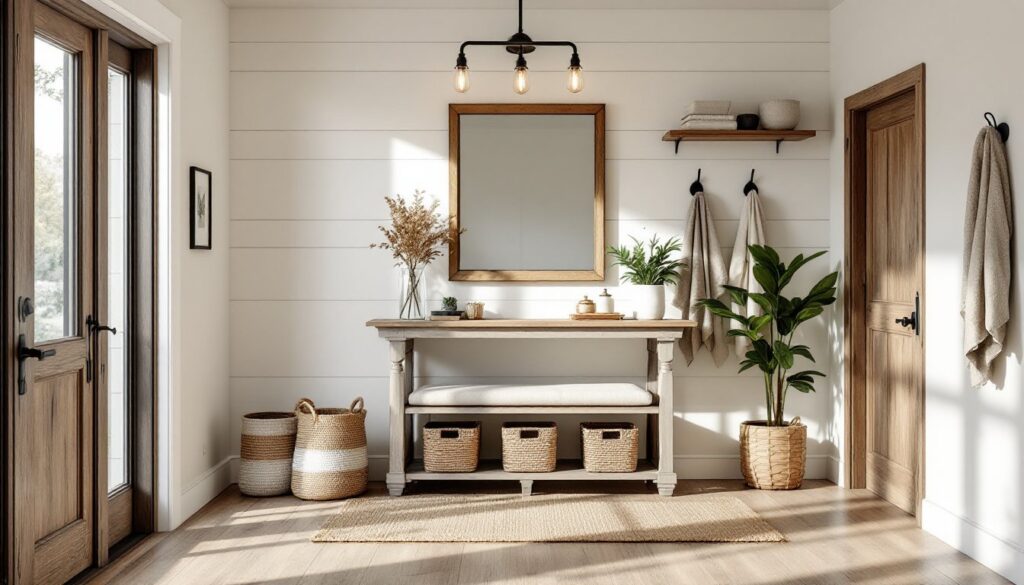
Your entryway is the first impression guests have of your home, and a reflection of how you live. A well-designed farmhouse entryway combines warmth, function, and character without relying on trendy shortcuts or unnecessary spending. Whether you’re renovating a small foyer or refreshing a sprawling mudroom, farmhouse entryway ideas deliver timeless appeal by blending rustic charm with livable spaces. This guide walks you through eight practical design solutions to craft an inviting entrance that works as hard as it looks beautiful.
Table of Contents
ToggleKey Takeaways
- Farmhouse entryway ideas emphasize rustic wood elements—reclaimed flooring, distressed consoles, and open shelving—as the foundation for warm, authentic character.
- Shiplap or beadboard accent walls deliver instant farmhouse appeal at a lower cost than full-room installation and pair beautifully with dark wood accents and vintage-style hardware.
- Functional storage solutions like wall-mounted shelves, mudroom benches, and labeled baskets prevent clutter while maintaining the clean farmhouse aesthetic.
- Neutral color palettes with three to four colors maximum, combined with natural materials like wood, leather, and linen, create the restrained, intentional look that defines farmhouse style.
- Start with one anchor piece—a statement wall or wood console—and prioritize functional challenges like storage and lighting before layering in textiles and decor for a livable, guest-ready entrance.
Embrace Rustic Wood Elements
Wood is the backbone of farmhouse style. Reclaimed barn wood, salvaged flooring, or new planks distressed to look aged create authentic character and warmth in your entryway.
Consider installing hardwood flooring or laying down wide-plank wood floors (typically 5–7 inches) that anchor the space visually. If replacing flooring isn’t in the budget, add a distressed wood console table, a reclaimed-wood bench, or open shelving made from barn wood. Nominal lumber sizes (like a 2×10 board) work well for shelving: an actual 2×10 measures 1.5 inches thick by 9.25 inches wide, so account for sag when spanning longer distances, use adequate wall fasteners or support brackets every 24 inches.
Wood beams, exposed or faux-beam casings, draw the eye upward and add structural drama. Real beams require assessment for load-bearing capacity and may need structural engineer consultation if you’re removing walls. Faux beams are faster to install: screw them to the ceiling joists using appropriately rated fasteners, and they deliver the same visual punch for a fraction of the cost and labor.
Finish raw wood with a matte or satin stain to avoid high-gloss shine that reads too formal. Test stain samples on scrap wood first: stain color shifts dramatically depending on wood species and application.
Create a Statement Wall with Shiplap or Beadboard
A shiplap or beadboard accent wall signals farmhouse instantly and costs far less than full-room installation. These boards interlock horizontally or vertically, creating clean shadow lines and texture without heaviness.
Shiplap comes in pre-primed boards (typically 0.75 inches thick, 5.5–7.25 inches wide) or unfinished options. Beadboard features a decorative bead along each board edge and works beautifully in mudrooms, half-baths, or behind an entry console. Both require a flat, dry substrate: prep the wall by filling gaps, sanding, and priming.
Installation steps:
- Locate and mark wall studs using a stud finder: they’re typically 16 inches apart.
- Apply a thin bead of construction adhesive to the back of each board.
- Nail through the tongue (the protruding edge) into studs using 2-inch finish nails, one nail per stud.
- Use a pneumatic nailer or nail gun to speed the job, hand-nailing takes patience but works fine for small areas.
- Leave a 1/4-inch gap at the ceiling and floor for wood movement (humidity causes wood to swell and shrink).
- Caulk gaps with paintable caulk once installed: prime and paint in two coats.
Modern farmhouse entryway ideas often pair white or cream shiplap with dark wood accents. If painting, use a high-quality primer first, it hides knots and ensures even paint coverage, reducing the number of topcoat layers needed.
Choose Vintage-Inspired Lighting and Hardware
Lighting sets mood and reveals the quality of your design choices. Farmhouse style favors black metal fixtures, brass accents, and Edison-bulb sconces that feel nostalgic without being kitsch.
For overhead fixtures, a wrought-iron or black-metal chandelier or flush-mount works well in compact entryways: ensure it doesn’t hang so low that tall visitors bump their heads, aim for 7 to 8 feet from floor to fixture bottom. Sconces flanking a mirror or statement wall add task lighting and visual balance.
Hardware, door hinges, knobs, hooks, and cabinet pulls, deserves attention. Vintage-style black hinges, wrought-iron bin pulls, and cast-iron coat hooks ground the space in farmhouse authenticity. Mix metals sparingly: pairing matte black with brass or brushed gold works, but don’t exceed three metal finishes in one entryway.
Vintage reproduction hardware is widely available and affordable: you don’t need genuine antiques to achieve the look. When replacing a door knob or deadbolt, ensure new hardware fits existing holes, or patch and re-drill to avoid a patchy appearance. Light bulbs matter too, warm white (2700K) Edison or vintage-style bulbs enhance the cozy farmhouse mood better than bright white (5000K) office-style lighting.
Add Functional Storage with Open Shelving
Entryways are dumping grounds for keys, mail, shoes, and outerwear. Well-designed storage solves this chaos without feeling cluttered. Open shelving keeps frequently grabbed items visible and accessible while displaying decor that reinforces your farmhouse aesthetic.
Wall-mounted shelves made from reclaimed wood or painted wood are easy to install: locate studs, secure shelf brackets rated for your load (typically 50–100 pounds per pair depending on size), and place shelves level using a spirit level. Shelves spanning more than 24 inches need support every 16–24 inches, or they’ll sag over time.
Baskets, wooden crates, and labeled bins keep clutter contained. Line shelves with woven baskets for shoes, canvas bins for gloves and scarves, and smaller decorative boxes for keys and mail. This layered approach lets you store everything while maintaining the clean, organized farmhouse look.
Incorporate a mudroom bench with cubbies underneath, a classic farmhouse-entryway solution. A simple wooden bench (pine, reclaimed, or new) with storage underneath costs $200–$600 depending on quality and materials. If your entryway is tight on space, wall-mounted hooks, a narrow console with shelves, or a slim coat rack serve the same purpose. Home Inspiration Ideas outline how to layer functional pieces while maintaining a cohesive design.
Incorporate Cozy Textiles and Seating
Soft elements, rugs, cushions, and throws, make an entryway feel inhabited rather than staged. A natural-fiber runner rug (jute, sisal, or wool blend) defines the entry zone, adds warmth underfoot, and traps dirt before it travels inside.
Choose a rug sized to at least 50% of your entryway footprint: a 3×5-foot rug works for smaller foyers, while a 4×6 or 5×8 suits larger spaces. A low pile (1/2 inch or less) or flat weave prevents tripping and works better in high-traffic zones than plush pile rugs.
Add a seating option, a farmhouse bench, Windsor-style chairs, or a settee, if space allows. A simple wooden bench with a neutral linen cushion invites people to sit while removing shoes or waiting. Pair it with a linen or wool throw draped over the back: it’s functional and adds texture.
Wall hooks (wrought iron or painted wood) hung at standard height (60–65 inches from floor to center of hook) accommodate coats, hats, and bags. Layer in a framed mirror above a console to reflect light and create depth.
Designers at Freshome emphasize that entryways benefit from one or two standout textiles rather than competing patterns. A striped runner or a solid neutral rug paired with a small patterned cushion achieves balance without visual noise.
Use Neutral Color Palettes and Natural Materials
Farmhouse thrives on restraint. Whites, creams, soft grays, and warm beiges form the backbone: darker wood, black metal, and natural textures add contrast and prevent monotony.
Stick to a palette of three to four colors maximum: a base neutral (cream or soft white), a secondary neutral (warm gray or taupe), an accent dark (charcoal or black), and one warm accent (warm brass or tan). This discipline keeps the space feeling intentional rather than random.
Natural materials, wood, metal, leather, linen, wool, jute, reinforce the farmhouse ethos more convincingly than synthetics. A genuine leather entry mat, wool runner, or linen throw feel authentic and wear beautifully over time. Reclaimed wood, rough-hewn stone (for a rustic touch), and aged metals patina and improve with age, adding character that new materials can’t replicate immediately.
Avoid glossy finishes, chrome, plastic, and high-shine materials: they read commercial rather than farmhouse. Matte paint, satin hardware, and natural wood stain or chalk paint create the right texture and finish.
According to Southern Living, regional farmhouse style often incorporates regional stone, locally-sourced wood, and materials that reflect the local landscape. An entryway in New England might feature darker, weathered wood, while a Southern farmhouse might use lighter, reclaimed pine or whitewashed finishes. Honor your region and climate, it deepens authenticity.
Conclusion
A farmhouse entryway doesn’t demand a full renovation or a designer’s budget. Start with one anchor piece, a statement wall, a wood console, or an open shelving unit, and build outward. Prioritize the elements that solve your entryway’s functional challenges first: storage for coats and shoes, adequate lighting, and a durable floor that withstands traffic. Layer in texture, warmth, and vintage character through wood, metal, and textiles that improve with age. The result is a genuine, livable farmhouse entrance that welcomes guests and serves your family for years.