Designing a shared bedroom for two brothers is both a practical challenge and a creative opportunity. Unlike decorating a single child’s room, you’re balancing two different personalities, preferences, and needs in one space. The goal isn’t to force a uniform look but to create an environment where both kids feel at home, without constant bickering over territory. This guide walks you through real solutions: from color schemes and zoning strategies to smart furniture layouts and personal touches that let each brother claim a stake in the room while maintaining a cohesive design. Whether you’re working with a small bedroom or a sprawling space, these shared bedroom ideas for brothers will help you maximize square footage while keeping peace in the house.
Table of Contents
ToggleKey Takeaways
- Establish a neutral color base (soft gray, warm beige, or pale blue) paired with individual accent colors for each brother to balance personal expression with visual harmony.
- Create physical zones using strategic furniture placement, low shelving, or sheer curtains to reduce conflict and give each brother a sense of ownership in the shared bedroom.
- Choose multi-functional furniture like loft beds, platform beds with drawers, and long desks with dividers to maximize limited space and minimize clutter.
- Incorporate shared bedroom ideas for brothers by displaying common interests (photos together, sports equipment) while reserving each zone for personal touches like posters or hobby collections.
- Invest in quality mattresses with proper safety features (securely anchored bunks, guard rails at least 5 inches high) and include separate bedding sets to prevent territorial disputes.
- Add extensive built-in and wall-mounted storage solutions with labeled bins and clear organization systems to keep the room functional as the brothers grow and their needs evolve.
Choose a Unifying Color Scheme That Works for Both
Starting with a neutral backdrop is your best friend here. Paint the walls a solid, calming color, soft gray, warm beige, or pale blue, that serves as the canvas. This approach avoids the trap of favoring one brother’s tastes over the other’s and keeps the focus on what matters: function and personal expression.
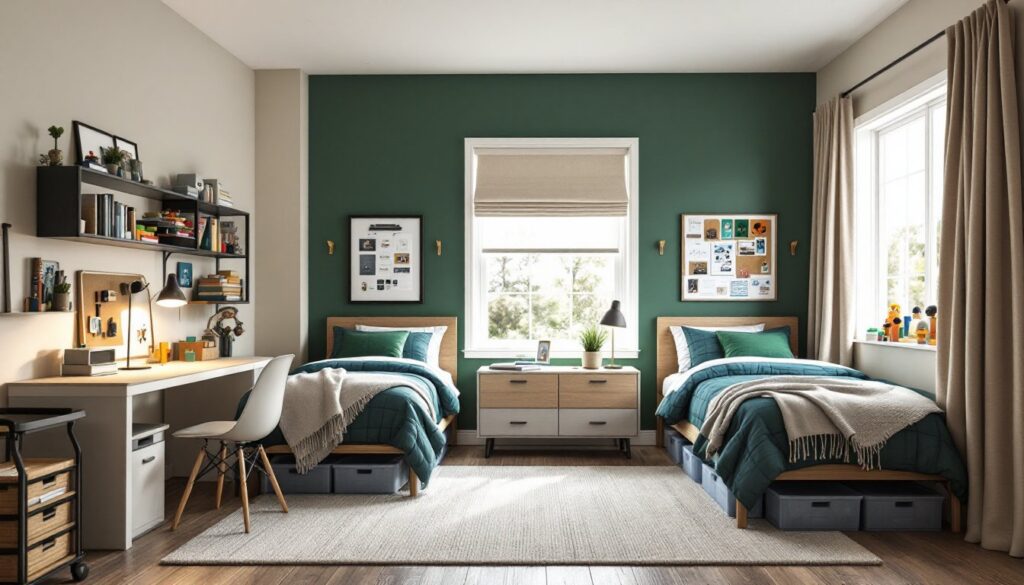
Once your base is set, let each brother choose one accent color or theme for his own zone. One might pick deep blue, the other forest green. They can express this preference through bedding, wall decals, or a small accent wall section. This respects individual taste while maintaining visual harmony in the overall room.
Avoid busy patterns or dark colors that make small rooms feel cramped. A single feature wall works better than multiple competing colors scattered throughout. If the boys are young, stick with colors that age well, bright neon fades fast, both literally and in terms of style. Save the bold choices for reversible elements like throw pillows or posters they can update as they grow.
Divide the Room Into Individual Zones
Physical separation is key to reducing conflict and giving each brother a sense of ownership. Furniture placement is your primary tool, arrange beds on opposite walls or in an L-shape configuration to create clear territories. This layout is far more effective than expecting two kids to coexist peacefully with beds facing each other.
If the room is large enough, a low bookshelf, curtain rod, or open shelving unit can mark the boundary between zones without blocking light or sight lines. Use a tension rod with a sheer curtain (inexpensive at most hardware stores) to create visual privacy without the finality of a closed door. This is especially helpful if one brother needs quiet time while the other plays.
Each zone should have its own storage, desk space (if applicable), and a few hooks for personal items. Label bins or shelves with their names so expectations are crystal clear. Designate a shared zone near the door or window for communal activities, LEGO building, board games, or assignments, so the room doesn’t feel like a competitive split.
Consider the traffic flow when zoning. Don’t block the path to the door or window with furniture: people naturally move in straight lines, and cramped paths lead to elbows in each other’s space. A well-thought-out floor plan prevents daily friction before it starts.
Select Functional Furniture That Maximizes Space
With two people sharing, every piece must earn its place. Skip the decorative-only dresser: pick one with deep drawers and a solid top that can double as a workspace or display surface. Loft beds or bunk beds free up significant floor area and are standard solutions in shared kids’ rooms, just ensure the ceiling height allows at least 2 feet of clearance above the upper mattress for sitting upright.
If both brothers prefer their own bed rather than a bunk configuration, consider twin platform beds with built-in drawers underneath. These maximize vertical storage without the hassle of footprint. Pair them with a single nightstand per boy or a narrow shared unit sandwiched between.
For desks, a single long desk (48-60 inches) with a divider panel or screen down the middle works better than two small desks squeezed into corners. It encourages proximity for assignments help while maintaining focus boundaries. Alternatively, a fold-down wall-mounted desk on each side takes minimal space and can be closed away when not in use.
Add Storage Solutions to Minimize Clutter
Clutter explodes in shared rooms. Build in as much storage as the space allows. Over-door organizers, wall-mounted shelves above desks, and under-bed containers are non-negotiable. A rolling cart with drawers (common at office supply stores) slides under a bed or into a closet and holds art supplies, toys, or tech cords out of sight.
Assign each brother a storage zone, perhaps the left side of the closet and the right. Use clear plastic bins with labels so they know exactly where their stuff lives and can tidy quickly. Rotate seasonal items to a garage shelf or attic to keep the room from becoming a storage unit.
Wall space is cheap real estate. Mount floating shelves at different heights, install a pegboard for organizing tools or craft supplies, or add a tension rod inside the closet for hanging organizers. The less junk on the floor, the bigger the room feels and the fewer things to trip over during roughhousing.
Incorporate Personal Touches and Decor They’ll Both Enjoy
This is where shared bedroom ideas for brothers come alive. Beyond the base design, let their personalities show. Hang a bulletin board in each zone where they can pin achievements, photos, or artwork. Posters of sports heroes, favorite bands, or hobbies tell visitors who sleeps here without dominating the room.
Choose decor items that reflect shared interests, sports equipment displayed on wall mounts, building sets on shelves, or framed photos of them together. These remind them they’re a team, even if they sometimes act like rivals. If they’re into different things, give each corner some breathing room for his own touches: one might have a basketball hoop above the trash can, the other a terrarium or model collection.
Area rugs define zones and add warmth. A neutral rug under the shared play area grounds the space, while smaller rugs (or washable fabric runners) can mark individual zones without overwhelming the floor. This approach is inspired by how interior design professionals create flow in open-concept homes, and it translates well to kid rooms where flexibility matters as their interests evolve. Look at global home design inspiration for ideas on layering rugs and textures that work in compact spaces.
Fabric also plays a big role. Window treatments should be functional (blackout options help kids nap or wind down) but don’t have to be fussy. A simple roller shade plus lightweight curtains in a neutral tone keeps light control flexible. Throw blankets on each bed add color and comfort without a major commitment.
Design a Comfortable Sleeping Arrangement
Sleep is non-negotiable, so get this part right. Each brother deserves a quality mattress appropriate for his weight and sleep style, this isn’t the place to cheap out. A memory foam or hybrid mattress (typically 8-12 inches thick) offers better support than a thin budget option and lasts longer, spreading the cost over years.
If you’re installing a bunk bed, anchor it securely to wall studs using lag bolts, don’t rely on feet alone. Bunk bed injuries happen when units tip, so follow manufacturer instructions precisely. The guard rails must meet current safety standards: if you’re using an older bunk bed, check that rails are at least 5 inches above the mattress surface.
Bedding sets should be easy to wash (machine-washable covers are essential) and durable enough to handle kids. Separate sets for each brother prevent territorial disputes. A simple duvet cover and fitted/flat sheet combo is easier to manage than elaborate quilts, and you can swap colors seasonally without major expense.
For loft or bunk setups, ensure adequate ventilation, these configurations can trap heat and moisture. If the room runs warm, a small fan pointed at the upper bunk helps. Consider the noise factor too: if one brother is a light sleeper, a lower bunk might frustrate him with someone climbing in and out above at night.
Nighttime lighting matters. A small reading light clipped to each headboard or a low-wattage nightlight lets them see without waking the other. DIY furniture projects and paint tutorials often include clever lighting hacks, some as simple as adhesive LED strips inside a headboard, that add warmth and function. Don’t overlook this detail: poor lighting at night invites stumbling and frustration.
Conclusion
A shared bedroom doesn’t have to feel like a compromise. By establishing clear zones, choosing a unified color base, and filling the space with smart storage and personal touches, you create an environment where two brothers can coexist peacefully, and maybe even enjoy sharing the space. The key is respecting both personalities while maintaining a functional, cohesive design that grows with them. Revisit the room as they age: what works for seven-year-olds won’t match teenagers’ needs. A solid foundation of neutral walls, flexible furniture, and defined territories makes those transitions smooth. Your sons will appreciate having a room that feels like theirs, and you’ll appreciate the peace that thoughtful design brings.