A fire pit transforms your backyard from an afterthought into the neighborhood’s favorite gathering spot. Whether you’re hosting weekend barbecues or just unwinding on a Tuesday night, a thoughtfully designed outdoor fire pit area sets the tone for relaxation and connection. The good news? You don’t need a massive budget or a landscape architect to pull this off. From sunken designs that save space to modern minimalist setups, these seven outdoor fire pit area ideas give you a real starting point, with honest talk about materials, effort, and what actually works in a real backyard.
Table of Contents
ToggleKey Takeaways
- Sunken fire pit designs maximize usable space and create natural wind barriers, but require checking local fire codes for a 10-foot clearance from structures and trees.
- A circular stone seating arrangement with blocks placed 4–5 feet from the pit center provides defined gathering spots that feel intentional and polished.
- Outdoor fire pit area ideas range from rustic wood-and-metal aesthetics to modern minimalist designs, allowing you to match your existing landscape style and budget.
- Multi-level terraced seating works with sloped yards and improves sightlines, though retaining walls over 4 feet typically need permits and engineering approval.
- Proper drainage, material selection for your climate, and annual maintenance (sealing concrete, treating metal, inspecting wood) determine the longevity and safety of your fire pit setup.
Sunken Fire Pit Design
A sunken fire pit sits below ground level, creating a natural wind barrier and a cozy conversation pit. The depth keeps embers and heat contained while the surrounding grade acts as built-in seating on three sides. This design works especially well on flat lots where you want to maximize usable space.
Start by marking a circle or square (typically 3 to 4 feet in diameter) and dig down 12 to 18 inches. You’ll hit rock, clay, or roots, that’s normal. Use a mattock or pry bar to break through. Line the bottom with 4 to 6 inches of gravel for drainage, then add a fire-resistant metal ring (fire pit rings are available in standard sizes) or build a ring using concrete pavers stacked and mortared together. Make sure the top of your fire ring sits just above or flush with ground level to contain ash and debris.
Backfill around the ring with soil, then compact it gently. You can leave the surrounding area as bare earth, add pea gravel, or install pavers in a small patio around the pit. A sunken design requires one key safety step: check local fire codes, which typically mandate a 10-foot clearance from structures and trees. Overhanging branches are a serious fire hazard. Ventilation matters too, don’t build this in a low spot where smoke gets trapped.
Circular Stone Seating Arrangement
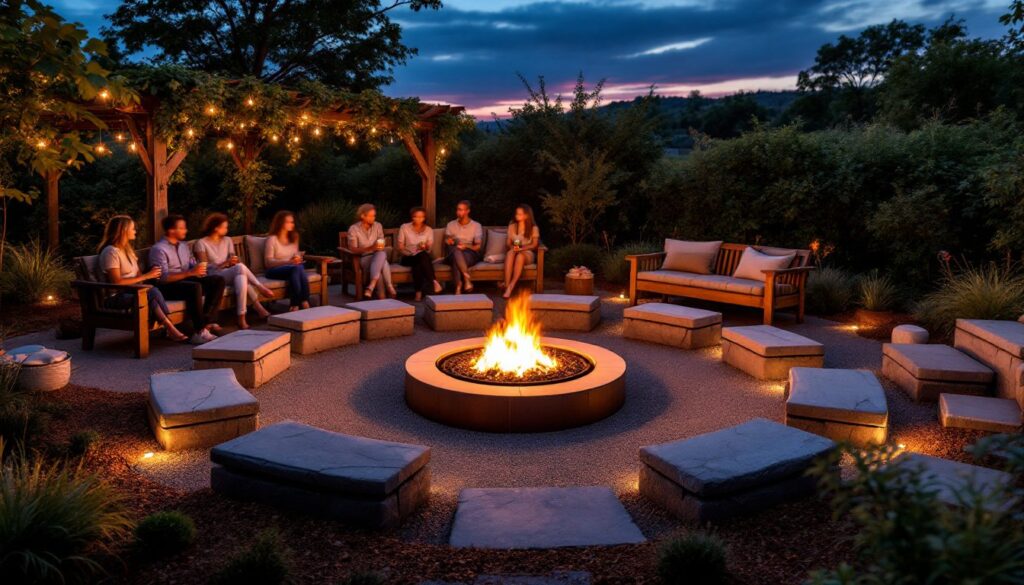
A fire pit surrounded by a ring of seating creates an intentional gathering space that feels designed rather than accidental. Instead of guests sitting on lawn chairs scattered around, a circular stone or concrete arrangement provides defined spots and a polished look.
The easiest method is to place a fire pit (either a ring or an above-ground metal bowl) in the center, then arrange stone or concrete blocks in a circle about 4 to 5 feet from the pit’s edge. Each block becomes a natural seat. You can use stacked natural stone (fieldstone or limestone), concrete pavers, or slab benches for a more finished look. Space blocks 18 to 24 inches apart so guests don’t feel crowded.
For permanence, set blocks on a compacted gravel base or a thin layer of concrete. For something temporary or adjustable, simply rest them on level ground. Add cushions for comfort, outdoor cushions rated for moisture withstand the elements better than standard indoor pillows.
Natural Stone vs. Pavers
Natural stone (fieldstone, slate, flagstone) has irregular shapes and textures that feel rustic and blend into the landscape. It’s beautiful but can be expensive ($8–$15 per square foot installed) and less uniform, making the seating height variable. Concrete pavers are affordable ($2–$5 per square foot), come in uniform sizes, and create a more formal appearance. Pavers are easier for DIYers to install, though they can crack in freeze-thaw cycles if not properly compacted underneath. Choose based on your existing landscape style and budget. A well-designed fire pit area often mixes materials, stone seating with a gravel or mulch bed underneath ties everything together.
Multi-Level Fire Pit Landscaping
Terraced seating around a fire pit adds visual interest and solves the problem of uneven ground. If your yard slopes, this design works with the grade instead of against it.
Build the pit at the lowest point of your slope. Behind it, install the first tier of retaining wall (railroad ties, composite boards, or stacked stone) about 12 inches high. Behind that, add a second tier. Each level becomes a seating area, the lowest tier sits closest to the fire, farther tiers offer views over guests’ heads. This staggered arrangement lets more people gather comfortably and improves sightlines.
Retaining walls that are more than 4 feet tall often require permits and engineering, especially if they’re holding back significant soil. Check with your local building department before digging. For DIY projects, stick to walls under 3 feet, they’re manageable without professional help. Backfill each tier with soil and plant ground covers, low shrubs, or ornamental grasses to soften the hardscape. A mulch or gravel layer between tiers helps with drainage and prevents erosion. Composite or pressure-treated boards are easier to install than stone but may need replacement in 8–12 years. Stone lasts longer but costs more upfront. A covered outdoor living room approach pairs well with tiered seating if you’re thinking about adding a pergola overhead.
Rustic Wood and Metal Aesthetic
Rough-hewn timber, wrought iron, and natural materials create a warm, lodge-like atmosphere. This style works whether you’re in the mountains or the suburbs, it’s about character, not geography.
Build benches from thick timber (6×8 or 6×12 beams) supported by metal legs or brackets. Pair them with a heavy-duty metal fire pit ring or a custom welded frame. Add a metal grate for cooking if the pit is safe and permits allow. Surround the area with wood chips, bark mulch, or packed earth rather than manicured pavers. Weathered wood accents, a wooden pergola frame, split-log railings, or a rustic tool rack nearby, reinforce the aesthetic.
Timber exposed to the elements will gray and crack over time. That’s part of the look, but regular sealing (once every two years) slows decay and keeps wood usable for longer. Metal hardware needs the same treatment, spray with a rust-inhibitor paint initially, then touch up annually. Wood benches require annual inspection for rot, especially at the ends where water collects. Safety reminder: keep all wood seating and structures at least 10 feet from the pit to prevent scorching or ignition from flying embers. If you’re planning a larger outdoor setup, consider pairing this with outdoor living room ideas to create zones for dining, lounging, and fire gathering.
Modern Minimalist Fire Feature
Clean lines, neutral colors, and intentional design define modern fire pit spaces. Think concrete platforms, steel rings, and open sightlines rather than clustered seating.
Install a sleek metal fire pit (often circular stainless steel or corten steel, which develops a controlled rust patina) in the center of a smooth concrete pad. Arrange built-in benches with concrete tops and steel frames around it, these can be purchased preformed or custom-built by a concrete contractor. Keep plantings sparse: ornamental grasses, a few architectural shrubs, and hardscape. Lighting matters here. Recessed deck lights or uplighting on the pit itself adds drama and extends usability after dark.
Corten steel pits age beautifully, developing a reddish-brown exterior that’s both decorative and protective. A modern design also scales well to smaller lots, you don’t need room for rustic sprawl. The minimalist approach pairs well with contemporary home architecture and clean exteriors. For a cohesive outdoor space, backyard makeover ideas that embrace modern design principles will tie your fire pit to the rest of the landscape. Concrete is durable but can crack in freeze-thaw climates: seal it annually in those regions. Metal finishes stay cleaner with periodic wiping to prevent buildup of ash and debris.
Conclusion
Your fire pit area doesn’t have to choose between style and function. Whether you go sunken, tiered, rustic, or modern, the winning formula is prep work, proper materials for your climate, and honesty about maintenance. Measure twice, check codes, and don’t skip drainage or grounding, that’s where most outdoor projects fail. Start with one of these designs, adjust it to fit your space and skill level, and you’ll have a gathering spot that gets used year-round. The fire pit itself is just the anchor: the real magic happens when friends and family show up.