The foundation of any great outdoor living space isn’t the furniture, it’s the flooring beneath it. Whether you’re building a new patio, replacing worn-out deck boards, or exploring backyard upgrades, choosing the right outdoor flooring sets the tone for how you’ll actually use that space. With options ranging from natural stone to low-maintenance composite materials, there’s a solution for nearly every budget, climate, and lifestyle. This guide walks you through seven proven outdoor flooring ideas, weighing the pros and cons of each so you can make an informed choice that fits your home and your habits.
Table of Contents
ToggleKey Takeaways
- Natural stone pavers deliver 20+ years of durability with minimal maintenance, making them ideal for homeowners seeking timeless outdoor flooring that ages beautifully in any climate.
- Composite decking eliminates the annual sealing and staining required by wood while providing a realistic wood-grain appearance at $10–$18 per square foot installed.
- Permeable pavers offer eco-conscious outdoor flooring solutions that reduce stormwater runoff while preventing puddling in wet climates, often qualifying for municipal tax incentives.
- Stamped concrete provides an affordable stone or brick appearance for $8–$12 per square foot but can crack in freeze-thaw climates and requires resealing every 2–3 years.
- Real wood decking offers warmth and charm but demands $1,500–$3,000 in annual maintenance, including sealing, staining, and protection from mold and splinters in humid regions.
- Matching your outdoor flooring choice to your climate, budget, and maintenance willingness ensures your patio becomes a functional gathering space rather than an expensive maintenance burden.
Natural Stone Pavers
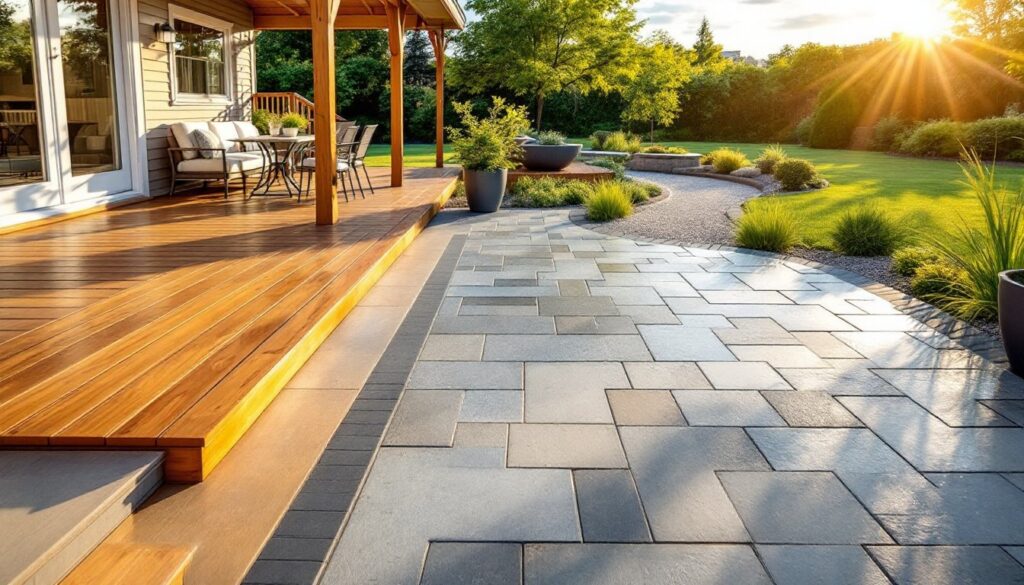
Natural stone pavers, whether flagstone, slate, granite, or bluestone, deliver timeless appeal and genuine durability. Each stone is unique, giving your patio character that manufactured materials struggle to match. Stones like bluestone and slate are popular because they’re dense, slip-resistant when wet, and age beautifully over time.
Why choose stone? It handles freeze-thaw cycles well in cold climates, doesn’t fade from UV exposure, and lasts 20+ years with minimal maintenance. A simple occasional sweep and power wash keeps them looking fresh. You’ll want to apply a penetrating sealer every 2–3 years if you want to protect against staining and limit water absorption, especially important in regions with heavy rain or snow.
The catch: installation is labor-intensive. Proper base preparation (compacted gravel, sand leveling) is critical: skip this and your pavers will shift and crack. Many homeowners hire a professional for this reason. Stone is also heavy, moving individual pavers requires strength or equipment. Budget for pros unless you’re comfortable doing meticulous, time-consuming work. Material costs run $6–$15 per square foot installed, depending on stone type and your region.
Composite Decking
Composite decking, a blend of wood fibers and plastic, bridges the gap between wood’s warmth and synthetic durability. It resists rot, splintering, and insects, making it a low-maintenance favorite for homeowners who want a wood look without the upkeep. Unlike natural wood, composites don’t need staining, sealing, or seasonal re-treatment.
Composite boards come in multiple colors and wood-grain finishes that mimic cedar or tropical hardwoods. They’re stable across temperature swings and don’t expand and contract like real lumber, so fastening is more forgiving. Most composites last 15–20 years, though higher-end brands push closer to 30.
Trade-offs exist. Composites cost $10–$18 per square foot installed, roughly 40–50% more than pressure-treated wood. They can soften in extreme heat and absorb stains (though this is cosmetic, not structural). Mold and mildew can still surface in damp climates: occasional cleaning prevents this. If you’re building on a slope or over a crawl space, proper Barrette Outdoor Living Decking solutions and sub-structure ventilation matter because trapped moisture is composite decking’s main enemy.
Permeable Pavers for Eco-Conscious Homeowners
Permeable pavers solve a real problem: conventional hardscaping sheds water, increasing runoff and straining storm drains. Permeable options (recycled plastic, porous concrete, or permeable pavers with open joints) let water drain through, reducing flooding and replenishing groundwater.
They’re ideal in wet climates or if you’re conscious about stormwater management, and some municipalities offer tax incentives for permeable surfaces. Recycled plastic permeable pavers are weather-resistant and won’t rot. Porous concrete is durable and straightforward to install. The trade-off: porous surfaces require more maintenance. Weeds can grow through open joints (a simple vinegar spray handles this), and the surface must be swept regularly to stay clean. Unlike sealed concrete, debris sits on top rather than being easily power-washed away.
When planning an Outdoor Living Room or entertainment area, permeable flooring prevents puddling and muddy walkways during heavy rain. Installation costs run $8–$14 per square foot depending on material type and base preparation, which is typically a compacted gravel layer that lets water percolate.
Stamped Concrete
Stamped concrete offers the look of brick, slate, or stone at a fraction of the cost and with easier maintenance. A concrete slab is poured, then while still workable, it’s stamped with patterns and textured molds, then sealed. The result looks convincing from a distance and is cheap, $8–$12 per square foot installed.
The appeal is obvious: low maintenance (no sealing grout lines, no settling pavers), clean lines, and design versatility. Colors and patterns are extensive. Properly sealed stamped concrete lasts 25+ years with occasional resealing every 2–3 years and simple washing.
Here’s where it falls short. Stamped concrete can crack, especially in freeze-thaw climates where water seeps into microfissures and expands. Once cracked, repair isn’t seamless, the patch won’t match the pattern perfectly. In very hot climates, dark stamped concrete gets dangerously hot underfoot. And if you ever want to change your mind, removing stamped concrete is difficult and expensive. Reseal every 2–3 years to prevent staining and water penetration, which is labor you can’t skip. Sites like The Spruce offer detailed maintenance guides if you go this route.
Gravel and Aggregate Options
Gravel is the budget option, literally pennies per square foot for crushed stone, pea gravel, or crushed granite. It drains instantly, looks natural, and works for casual pathways and gathering areas. It’s perfect for a rustic aesthetic or a temporary solution while you save for permanent flooring.
The reality: gravel is high-maintenance. You’ll rake it to level sunken spots, refill depleted areas seasonally (especially after winter snow removal), and manage weeds. Animals track it into the house. It shifts under foot traffic and furniture legs sink. Dust and sediment migration happens in rain, so gravel under roof gutters isn’t ideal.
For practical outdoor entertaining, gravel shines as edging or under Outdoor Living Patio Furniture legs to define zones and add traction. Use larger aggregate (pea gravel, 3/8-inch crushed stone) rather than fine dust to minimize tracking. If choosing gravel for main living areas, lay landscape fabric underneath to suppress weeds and slow migration, then anchor it with edging to contain the material.
Wood Decking
Real wood decking, pressure-treated lumber, cedar, or tropical hardwoods, is the classic choice. Pressure-treated wood is affordable ($4–$8 per square foot for materials), readily available, and strong. It’s treated with preservatives to resist rot and insects, though the chemical smell fades over weeks. For a warmer look and naturally rot-resistant properties, cedar or composite alternatives cost more but age better.
Wood requires commitment. You’ll need to seal or stain it every 2–3 years depending on your climate. In humid regions, mold and mildew take hold quickly, you’re looking at an annual or twice-yearly scrub-down. Splinters emerge as the wood ages: sanding helps but isn’t permanent. Snow and ice removal requires care to avoid damage. High-traffic areas wear gray and dull over time even with maintenance.
That said, wood feels warm underfoot, works with any style, and is genuinely repairable. A damaged board is simply replaced. Plan to budget $1,500–$3,000 annually for a deck the size of a typical master bedroom (12×14 feet) just for maintenance and repairs. Outdoor Living Space Contractors can provide guidance on species selection and upkeep if you choose this route. Woods like ipe or cumaru outperform pressure-treated in durability but are significantly more expensive.
Conclusion
Your outdoor flooring choice shapes how your space weathers time, how much you’ll maintain it, and whether it becomes an actual gathering place or just an expensive afterthought. Natural stone offers elegance and longevity but requires professional installation. Composite decking delivers convenience at a premium. Permeable pavers serve eco-minded homeowners. Stamped concrete is budget-friendly but crack-prone in cold climates. Gravel works for rustic settings if you’re okay with constant upkeep. Real wood provides warmth and repairability alongside significant maintenance demands. Match your choice to your climate, budget, and honestly, how much time you’ll actually spend caring for it. A well-chosen floor turns outdoor living from a chore into a pleasure.