A well-decorated patio is an extension of your home, a place where you actually want to spend time, whether you’re hosting friends or settling in with a morning coffee. The difference between a bare patio and an inviting outdoor living space often comes down to thoughtful layering: lighting, seating, greenery, and those finishing touches that make it feel intentional. This guide walks you through seven practical patio decor ideas that won’t drain your wallet or require a contractor’s license. You’ll learn what works, what lasts, and how to put it together yourself.
Table of Contents
ToggleKey Takeaways
- Layered lighting with string lights, solar stake lights, and uplighting transforms your patio into an inviting outdoor living space after sunset without breaking the budget.
- Comfortable, well-arranged seating in a conversation style is essential because no patio gets used if sitting down is a chore—choose weather-resistant materials like powder-coated metal or Sunbrella-cushioned frames.
- Large container plantings in odd numbers (3–5 pots) add life and color to your outdoor patio decor while remaining low-maintenance and adaptable to your light conditions.
- A durable outdoor rug (6-by-9 feet or larger) anchors your seating area and makes the patio feel like a complete room rather than just a concrete slab.
- Shade solutions like pergolas, shade sails, or retractable awnings extend your patio season and protect guests from UV damage while improving comfort.
- Personalize with 5–7 carefully chosen decor accessories—wall art, lanterns, fire tables, and coordinated textiles—to create an intentional space that reflects how you want to live outdoors.
Create Ambient Lighting With Layered Effects
Lighting is the secret weapon of outdoor design. Without it, your patio becomes a no-go zone after sunset, even if you’ve invested heavily in everything else.
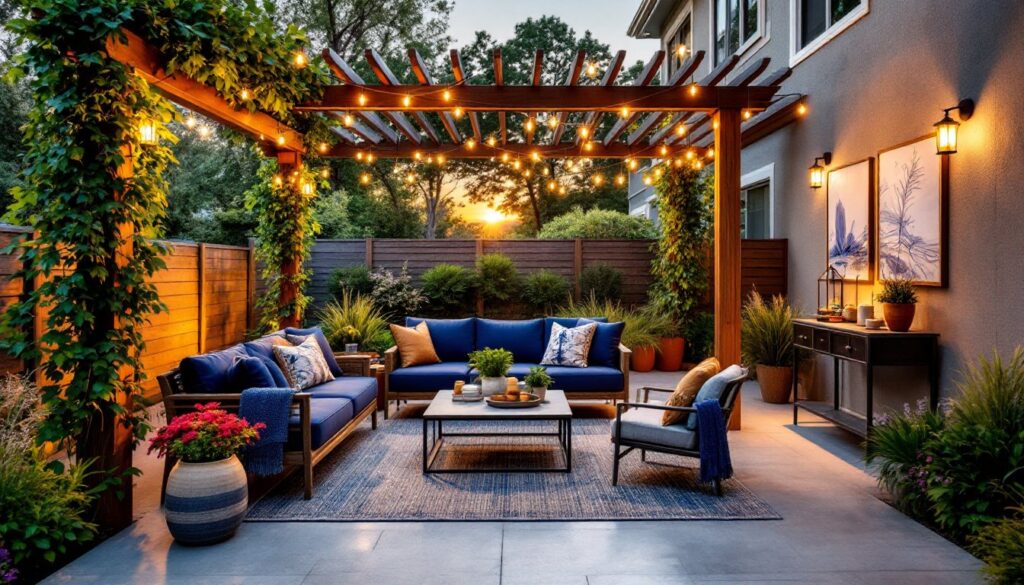
Start with a base layer. String lights (also called bistro lights or café lights) strung overhead create warmth and define the space visually. These come in Edison-style bulbs (pricier but atmospheric), LED options (energy-efficient, last years), or simple frosted globes. Hang them in a zigzag pattern across your patio or deck for the cleanest look. You’ll need a weatherproof outlet and a little planning to ensure they don’t sag, use lag bolts or eyebolts anchored into solid framing, not just fascia.
Layer in accent lighting next. Solar stake lights along pathways cost next to nothing and need zero wiring. Lanterns on tables with pillar candles or LED candles (safer than flame outdoors) add intimacy without blinding your guests. For something more permanent, consider low-voltage LED deck lights recessed into steps or posts, these run on a transformer plugged into a standard outlet and won’t blow your electric bill.
Finally, think about uplighting. A single landscape spotlight aimed at a tree or textured wall adds depth and keeps the space from feeling flat at night. Warm color temperature (2700K) always feels more inviting than cool white.
One honest note: If you’re running new circuits or burying cable, you may need a licensed electrician and a permit, depending on your local code. It’s worth getting right the first time.
Incorporate Comfortable and Stylish Seating
No patio gets used if sitting down is a chore. Your seating is the centerpiece of the whole experience.
Start by deciding your layout. A conversation-style arrangement (two or three pieces facing each other) invites people to linger. A sectional with a fire table works great for gatherings. Single lounge chairs scattered around the perimeter suit a more relaxed vibe. Measure your patio first, a sectional that looks generous in the showroom can swallow a 12-by-14-foot patio whole.
Material matters. Teak and cedar are naturally rot-resistant and age beautifully, though they require annual oiling. Aluminum frames with weather-resistant cushions (like Sunbrella fabric, which resists fading and moisture) are lower-maintenance and usually cheaper upfront. Metal rusts without care, so choose powder-coated finishes. If budget is tight, composite wicker frames paired with deep-seat cushions give the look of high-end lounge furniture without the premium price.
Cushions and pillows are where comfort happens, and where your budget can balloon quickly. Invest in outdoor-grade cushion covers (not patio furniture covers, which trap moisture). Store cushions indoors over winter in harsh climates, or buy waterproof storage boxes for on-site protection.
Consider your outdoor furniture layout carefully. Group seating around a fire table or low coffee table so people have somewhere to set drinks without balancing them on their laps. Add a side table or two for function, not just looks.
Add Greenery and Landscaping Elements
Plants bring life and color to a dead patio slab. You don’t need to be a gardener to pull this off.
Start simple with large container plantings, 5-gallon or 10-gallon pots grouped in odd numbers (three or five, not four or six) feel more natural and balanced. Use a quality potting mix (not garden soil, which compacts in pots), not native soil from your yard. Choose plants suited to your light conditions. Shade-loving hostas and ferns work great on north-facing patios. Full-sun areas handle ornamental grasses, sedums, and evergreens like boxwood. Mix in annual flowers for seasonal color, petunias and verbena are tough and forgiving.
Don’t overlook living walls or trellis systems. A vertical garden of trailing pothos or clematis on a wall or fence can be installed in an afternoon and softens hard edges. Trellises also frame views and create the feeling of enclosure without blocking breezes.
If you want permanent landscaping, consider raised beds built from composite boards or rot-resistant lumber (cedar, redwood, or treated pine rated for ground contact). These add depth, define edges, and are less daunting than in-ground planting for renters or those unsure of tenure. Fill with good soil and perennials that don’t require constant babying.
Water needs matter too. Set up a soaker hose or drip line on a timer so your patio plantings stay alive during dry spells. Container plants dry out fast in summer, missing a few days can kill them.
Choose Durable Outdoor Rugs and Textiles
A good outdoor rug anchors a seating area and makes the patio feel more like a room than a slab of concrete.
Look for polypropylene or solution-dyed acrylic rugs, these are designed to shed water and resist mildew, unlike indoor rugs that’ll rot in a season. Outdoor rugs come in bold patterns and colors because they need to hold up to UV fading: neutral tones fade fastest outdoors, so lean into saturated brights or deep tones. Size matters: a rug should be large enough to anchor your seating group (at least 6-by-9 feet for a standard conversation set), or it’ll look skimpy.
Beyond rugs, layer in other textiles strategically. Throw pillows in outdoor-grade fabric add comfort and visual interest without very costly. Outdoor blankets draped over a chair or thrown over a lounge seat invite people to get cozy, especially as evenings cool. These need regular shaking and indoor storage in humid climates to prevent mildew.
Consider a tablecloth or runner for dining areas. Spillable outdoor fabric (treated to repel water) keeps your patio table looking intentional and protects the surface from stains.
One critical rule: Never leave outdoor textiles out during heavy rain or wet season. Moisture trapped underneath invites rot and mold. A covered outdoor living room or pergola helps, but if you’re fully exposed, fold textiles and tuck them into a weatherproof storage bench on non-use days.
Define Your Space With Shade Solutions
Shade isn’t just comfort, it extends your patio season and protects guests (and your seating) from UV damage.
A fixed pergola or shade sail is the most elegant long-term solution. Pergolas bolt to your house or deck ledger and posts set in concrete footings. They’re semi-open by design, so you get partial shade and airflow. Shade sails (triangular or rectangular fabric canopies) are cheaper and simpler to install, they bolt to existing posts or trees and angle to catch wind without collecting water. Both require some carpentry skill or a handy friend.
Retractable awnings offer flexibility. They roll out when you need shade and retract when clouds roll in, protecting fabric from weather. They’re pricier upfront but give you full control. Some motorized models run on a timer or sensor.
For a budget option, a simple pop-up canopy (10-by-10 feet, around $100–200) works for events or temporary shade. These aren’t year-round solutions, wind will shred them, but they’re portable and rentable if you’re not sure about commitment.
Think about sun path before you build or buy. Morning sun is less intense than afternoon sun, so if your patio faces south or west, prioritize afternoon shade. North-facing patios barely need it. East-facing? Morning shade might actually be a bonus if you’re an early riser.
A dense outdoor patio living room with both shade structures and tall potted plants creates microclimate zones where guests can choose their comfort level.
Personalize With Decor Accessories and Art
Accessories finish the job. They’re how your patio stops looking like a staging catalog and starts feeling like yours.
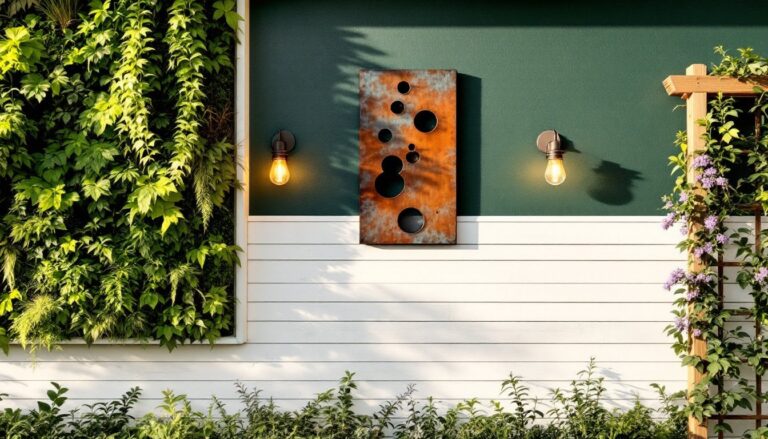
Outdoor wall art, whether metal sculptures, painted signs, or framed prints in weatherproof cases, adds character. Hang items on fences or walls at eye level so they actually read from a seating position. Large-scale pieces (24 inches or bigger) make more impact than tiny details.
Functional decor counts too. A weatherproof side table holds drinks and a small potted plant. A woven basket for throw blankets looks polished and stays organized. Solar lanterns on a shelf add ambient light and visual interest. Fire tables or fire pits are decor and functional, they draw people in and extend usable hours into cooler evenings.
According to design guides at Better Homes & Gardens, color repetition ties spaces together. If your cushions are navy, echo that in a pillow or planter. If you’ve chosen warm metal finishes (bronze, copper), keep those consistent across light fixtures and hardware.
Don’t overcrowd. A sparse patio with a few well-placed pieces feels intentional: a jammed-full patio with twenty little decorations feels cluttered. Aim for five to seven key decor elements (rug, pillows, wall art, planter, lights, etc.) and let the space breathe.
Personalization isn’t about expensive designer finds, it’s about choosing pieces that genuinely reflect how you want to live outdoors. A handmade sign, a collection of mismatched vintage pots, or a wall of hanging photographs all work if they feel authentic to you.
Conclusion
Building a patio that actually gets used comes down to addressing the basics: you need light, comfortable seating, shade, and finishing touches that make the space feel complete. Start with one or two elements, maybe lighting and seating, then layer in greenery, textiles, and decor as your budget and energy allow. The goal isn’t perfection: it’s creating a space where you want to spend time. Your outdoor living patio doesn’t need to look like a magazine spread to be functional and beautiful. Begin this season, refine next year, and enjoy the space in between.