Your outdoor walls are blank canvases, and right now, they’re probably wasted real estate. Whether you’re staring at weathered siding, plain fence panels, or bare concrete, those vertical surfaces can define your entire outdoor living experience. Outdoor wall decor ideas don’t have to be expensive or require a contractor’s help. With the right approach, you can transform tired walls into eye-catching focal points that make your backyard feel intentional, inviting, and genuinely livable. We’ll walk through seven practical approaches that work on any budget and skill level.
Table of Contents
ToggleKey Takeaways
- Outdoor wall decor ideas transform blank vertical surfaces into functional, eye-catching focal points without requiring expensive contractors or advanced skills.
- Vertical gardens and living walls are beginner-friendly starting with small 2-by-4-foot panels using fabric planter systems that hold multiple succulents or trailing plants.
- Murals and peel-and-stick outdoor wallpaper offer both temporary and permanent options, with exterior-grade paint and proper surface prep taking just 3 to 4 days for a complete transformation.
- Layered lighting combining string lights, wall sconces, and uplighting extends usable evening hours while dramatically improving ambiance and mood on outdoor walls.
- Wood paneling and shiplap add warmth and texture to any space, with pressure-treated lumber or cedar requiring simple fastening and periodic sealing every 2 to 3 years.
- Metal wall features and sculptures provide low-maintenance, rust-resistant alternatives that create striking focal points and define your outdoor personality for years to come.
Vertical Gardens and Living Walls
A living wall packed with herbs, succulents, or trailing vines turns dead wall space into a lush, functional feature, and it’s more achievable than you’d think.
Easy Installation Tips for Beginners
Start small. You don’t need a 10-foot statement wall your first time around: a 2-by-4-foot panel on a side fence or patio wall proves the concept without overwhelming you. The easiest route for beginners is a wall-mounted planter pocket system made from weather-resistant fabric. These hang like a shoe organizer and hold 4 to 12 small plants depending on size.
For installation, you’ll need a level, exterior-grade lag bolts (½-inch diameter works for most), and a drill with a ½-inch bit. Mark mounting points at least 16 inches apart (matching your wall studs if it’s wood framing) and secure the top rail first, this takes roughly 20 minutes. Studs are the vertical framing members behind drywall or siding: finding them with a stud finder prevents the planter from ripping loose under weight.
Fill pockets with quality potting soil (not garden soil, it compacts and holds too much water). Trailing sedums, string-of-pearls, and creeping fig work beautifully and need minimal water once established. For shadier spots, try pothos or small hostas. Water deeply but infrequently: the fabric drains fast, so check soil moisture by touch before watering.
If you live where winters are harsh, swap out plants seasonally or bring portable systems indoors. A living wall adds texture and a sense of care that reads immediately to visitors, and unlike fixed decor, it grows and changes.
Outdoor Wall Art and Murals
Murals and art pieces give instant personality. You can go huge and permanent, or test the water with smaller, removable options first.
For renters or commitment-phobes, removable outdoor wallpaper or peel-and-stick tiles offer pattern and color without paint prep. These stick to clean, dry surfaces and last 2 to 3 years in typical weather. Geometric designs and botanical prints work best on vertical surfaces where wind won’t peel corners. Cost runs $20 to $60 per panel, and installation is literally peel-and-stick.
If you own and want permanence, consider a mural. You don’t need an artist. A DIYer with decent brushwork and an outdoor paint can execute a geometric pattern, color block, or faux brick effect in a weekend. Use exterior-grade acrylic paint (not interior latex) and a primer formulated for outdoor masonry or wood, these resist UV fading and moisture. Coverage averages 250 to 400 square feet per gallon, so a 4-by-8-foot wall needs about a gallon of primer and one of finish paint.
Prep is non-negotiable: pressure wash the surface, let it dry for 48 hours, fill cracks with outdoor caulk, and sand rough spots smooth. Sketch your design lightly with chalk first. Use 2-inch foam rollers for flat coverage and angled brushes for crisp edges. The whole project, from prep to final coat, takes 3 to 4 days with proper drying time between coats. Popular designs trending now include abstract line work, nature-inspired botanicals, and sunset gradients. Recent outdoor decor trends show statement murals gaining momentum as homeowners reclaim their walls.
Lighting Solutions That Add Ambiance
Lighting does double duty: it extends your usable hours and transforms the mood of an outdoor wall from functional to aspirational.
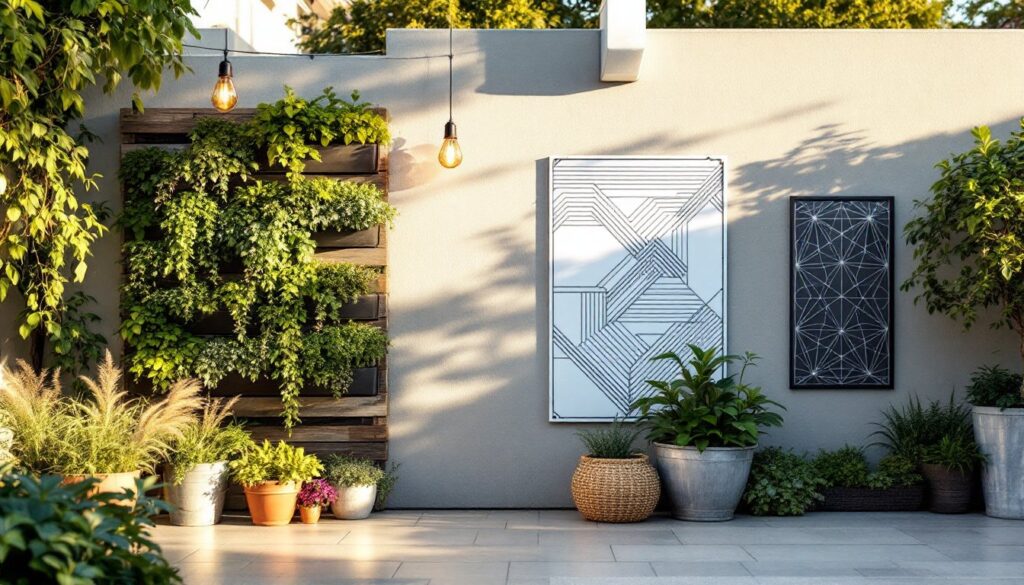
String lights are the workhorse. Bistro-style café lights strung horizontally across a patio wall create warmth and intimacy for under $30 to $80. Use exterior-rated hooks or lag eye bolts anchored into studs to hold them securely. Run the line tight to prevent sag, if the span is longer than 15 feet, add a mid-point support. Solar-powered options eliminate the need for outlets but deliver dimmer output than plug-in versions: they’re fine for ambient light but won’t illuminate a work area.
Wall sconces, mounted light fixtures attached directly to the wall, serve practical and aesthetic purposes. LED sconces draw minimal power and last years without bulb changes. Installation requires running an electrical circuit or tapping an existing outlet: this is worth hiring a licensed electrician for safety and code compliance (local electrical codes vary, and improper installation voids warranties and risks fire). Budget $150 to $400 per light fixture including labor.
Uplighting (ground-mounted lights pointing upward) highlights architectural features, planting, or texture on the wall itself. These work beautifully for flagstone, stucco, or wood and can be hidden among plants. Solar uplights cost $15 to $40 per unit and need no wiring.
Combine two or three types for layered ambiance. String lights for general cheer, a sconce for task lighting near a seating area, and hidden uplighting for drama. Outdoor living spaces benefit enormously from thoughtful lighting, it’s often the difference between a backyard people avoid after dark and one they actively use.
Wooden Accents and Paneling
Wood brings warmth and naturally complements almost any outdoor setting. Whether you’re adding boards, planks, or a full accent wall, wood work is surprisingly doable for intermediate DIYers.
Shiplap or horizontal planking mimics that trendy farmhouse vibe. 1-by-8 or 1-by-10 nominal lumber (which measures closer to 7.5 or 9.5 inches actual) works well for walls. Pressure-treated or cedar resists rot: cedar costs more but looks better and smells wonderful. At current pricing, expect $2 to $6 per linear foot depending on grade and wood type (prices fluctuate regionally).
Installation requires 2½-inch exterior-grade nails or deck screws. Snap a chalk line level from side to side every 16 inches to keep rows straight, then fasten each plank through the sheathing into studs behind. Use a pneumatic nail gun (easier and faster) or hand-drive nails with a framing hammer. Space planks ⅛-inch apart to allow for seasonal wood movement: wood swells when wet and shrinks when dry, and gaps prevent buckling. The entire process for an 8-foot-wide, 6-foot-tall wall takes about 4 to 6 hours solo.
After installation, apply exterior stain or clear sealant to protect against UV and moisture. Most sealants need reapplication every 2 to 3 years. If you want low maintenance, consider composite boards (wood-plastic blends) that resist rot and fade-proof better, they cost double but save refinishing labor. Wall textures add depth to any space, and wood naturally provides both visual and tactile interest.
Metal Wall Features and Sculptures
Metal brings industrial edge or rustic charm, depending on the finish and style. Metal requires no maintenance like wood does, making it a solid choice for low-upkeep spaces.
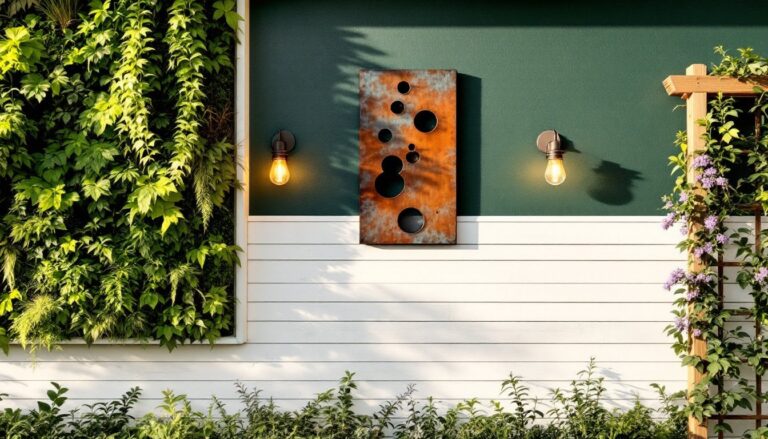
Decorative metal panels, think geometric cutouts, geometric patterns, or abstract screens, mount flat against a wall or stand slightly proud to cast shadows. Laser-cut steel or aluminum versions run $40 to $150 per panel (2-by-4 feet typical). Installation is simple: locate studs, use lag bolts with washers to prevent the bolt head from sinking into softer metal, and space fasteners no more than 2 feet apart. A single panel takes 15 minutes to hang.
Planters and wall-mounted baskets in metal, galvanized steel, copper, or powder-coated finishes, add utility and visual interest. They’re lighter than ceramic and won’t crack in freeze-thaw cycles. Use heavy-duty L-brackets rated for the combined weight of planter plus soil (soil is heavy: add 50 pounds per cubic foot when calculating load). Covered outdoor living spaces especially benefit from metal planters since they’re weather-proof and low-maintenance.
Wrought iron or welded-steel sculptures, wall-mounted art pieces, family monograms, or nature scenes, serve as focal points. These often require custom fabrication, running $200 to $1,000+ depending on size and detail. Source them through local metalworkers or online artisans. They’re permanent installations (you’ll likely need help positioning them safely) but become conversation pieces that define your outdoor personality.
Metal’s advantage: rust-resistant finishes mean virtually no maintenance, and metal stands up to wind and weather without splintering or warping. The downside is cost, premium pieces aren’t cheap, but a single statement piece often does more for a space than five smaller, generic options.
Conclusion
Your outdoor walls don’t have to stay invisible. Whether you choose a thriving vertical garden, a bold mural, layered lighting, wood warmth, or striking metal sculpture, each approach works on a budget and skill level that fits your comfort zone. Start with one wall, test what resonates, and build from there. The best outdoor decor is the kind that makes you want to spend time outside, and walls that matter are the first step toward a backyard that actually feels like home.